The Transformative Power of Redemption, as Experienced through Regenerative Agriculture.
Redemption is traditionally understood as the restoration of something which was lost or broken. We’ve all experienced loss to some degree - nothing in this life lasts forever - and whether by age, neglect or mis-management, loss and decay are inevitable. The things we prize, freedoms we love and relationships we cherish look as though they’ll remain forever, and it’s a shock to realize one day that the things we thought were going to last forever, are no longer with us.
It is ever-so-similar for farmers, when they hold a handful of soil which used to be so fruitful, so full of life and bounty, and they wonder where farming went wrong. Why the land is apparently so dead, and why farming requires such an overwhelming degree of chemical fertilizers, pesticides and crippling debt, to remain viable. IS it even viable? Today we are told “This is what farming is now. This is progress. This is the only way forward.” And farmers see their lifestyle, once so healthy and honorable, as nearly dead and lost.
However, this is not the way it has to be.
Just as redemption narratives speak of "second chances," regenerative farming demonstrates that ecological damage does not have to be permanent. Neglected and marginalized acreage and “verge” lands can be returned to bountiful production through patient intervention and applied stewardship. The physical transformation of regeneratively-managed soil and groundcovers, and the restoration of native pollinator populations provide us with proof that loss isn't always final.
Today, I’d like to share a few thoughts I have about a powerful counter-narrative to extractive farming, a narrative called Regenerative Agriculture.

Narrative One: Physical Redemption - Land That Was "Lost" Becomes Productive Again
Conventional Agriculture treats soil as an inert medium. Topsoil is thought to be expendable, because it can be replaced by chemical fertilizers. Industrial farming extracts soil nutrients through overtillage and monocrop soil nutrient absorbtion until depletion requires synthetic fertilizers, creating dependency cycles and negative feedback loops. But, Regenerative Agriculture reverses this: we use cover crops to rebuild organic matter, no-till practices protect soil structure, and diverse crop rotations in order to restore microbial communities. Land once deemed "worn out" becomes fertile again.
Transformative Parallel: Just as redemption narratives speak of "second chances," regenerative farming demonstrates that ecological damage isn't permanent. Degraded acres can return to bountiful production through patient intervention. The physical transformation provides empirical evidence that current loss isn't necessarily final loss - a powerful counter-narrative to extractive economics.

Narrative Two: Temporal Redemption - Shifting from Quarterly Cycles to Generational Thinking
There is an extractive model found across all conventional agriculture: Maximize yields this season, regardless of next year's consequences. Prop-up soil and crop vitality (not health) with applied liquid additives. Use financed inputs now, to create short-term gains with long-term liabilities. But Regenerative Agriculture offers us a redemptive model: We understand that soil is a living superorganism. We understand that true health is far more than “popping a pill” for instantaneous effects, rather it requires thoughtful stewardship and applied sacrifice - for example, we might accept lower crop yields now in order to build capacity for decades ahead. Compost applications can take 2-3 seasons to show full effect. Arboriculture plantings take 5-15 years to mature. Honeybee colony establishment often requires patient stacking of progress across multiple honeyflow seasons and multiple winters.
Transformative Parallel: Redemption operates on different time horizons than Transaction. A farmer planting a poly-canopy pasture for multi-species graze won't necessarily benefit from the gains they bear in the first season or two, but years later their children and grandchildren will still experience positive feedback production loops stemming out of their stewardship. This intergenerational patience contradicts dominant economic logic, yet it creates lasting value. Regenerative Agriculture teaches that meaningful transformation cannot be rushed—both ecologically and personally.

Narrative Three: Relational Redemption - Rebuilding Broken Connections
Broken Relationships are the rule today in modern farming - Between farmers and consumers there is a preponderance of anonymous supply chains, where growers and consumers never meet each other, if they even know who grew the crops at all. Farmers, and especially small-plot MicroFarm growers are far-removed from networked interfarm relationships, so they end-up working largely alone, on their own steam, and consequently they are easily overwhelmed by the rigors of farming solo.
Between producers and land there are broken connections, to say nothing of the broken relationship between humans and pollinators - there is a drastic broken connection: Pollinator populations have been dropping precipitously for decades, as individual-farm boundaries are merged to create megafarms, and monocrop agriculture destroys the “verge” flora species which provided forage for pollinators throughout the season. Monocrop pesticide dumps develop pollinator “food deserts” in seemingly fertile farmland, and with the extravagant loss of pollinator species, connection to healthy landscapes is strained nearly to the breaking point - we cannot have a healthy land without pollinators - it’s simply not possible.
Restored Relationships:
Renova works "with local growers and producers to build a sustainable network". Within the structure we are endeavoring to build (our Renova K.Y.G. Network), urban residents are enabled to connect to food sources through micro-farms local to their dwelling. Farmsteads link to each other relationally, not just symbolically or geographically. Consumers and producers get to know each other personally at CSA meets and local pickup markets. These are not random interactions - it is a purposeful activity aimed toward rebuilding networked relationships between growers and consumers, and raising awareness of the redemptive effects found in Regenerative Agriculture. For as valiently as we are all working, unless the greater populace is made aware of the healing oppotunity they have to redeem Virginia lands, alone the word is not made effective - we have to walk and talk together, to be effective.
Transformative Parallel: Redemption isn't solitary—it requires reconciliation across relationships. Regenerative Agriculture forces acknowledgment of interdependence: whether between mycorrhizal fungi and crop roots in healthy soil tilth, fruit trees and bees; farmer relationships with neighbor farmers, or grower/purchaser supply chains. Prosperity in Regenerative Agriculture depends on relational honesty and forthrightness, willingness to know, to be known and to act. This networked view of flourishing contradicts the individualism and pride often found today in commercial farming.
Narrative Four: Symbolic Redemption - Landscapes as Cultural Memory
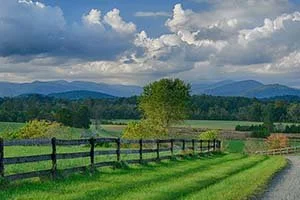
Virginia has been long-known for her "Legendary Fertility": Renova brings to mind this historical memory - "restoring the legendary fertility and bounty of Virginia" - positioning our current work as invoking an ancestral promise, not starting from afresh. As a family-based enterprise growing out of a history-loving family, we see Today through the eyes of Yesteryear, not Yesterday through the eyes of Today. There is meaning in this: our ancestors came and built this country with a vision for the future, that the generations that came after might inhereit a beautiful and fruitful land, with freedom afforded for all in peace. Today we behold many freedoms, soils, waters and health systems as degraded, eroded and struggling, but not yet gone. And even if some are gone, we remember that gone now is not gone forever. Some fires may be rekindled, some relationships may be restored, some farms rebuilt and some rare breed species saved from the brink of extinction. It all comes down to laboring together through redemptive stewardship, serving for the good of others above yourself, and building beyond consumption.
Virginia holds a Cultural Farming Legacy, as well as a place of honor among the other twelve original colonies, which together shaped the birth of our great nation. We honor that past, and protect our future, by protecting and stewarding our farmlands through Regenerative Agriculture.
Conclusion: Redemption Made Visible
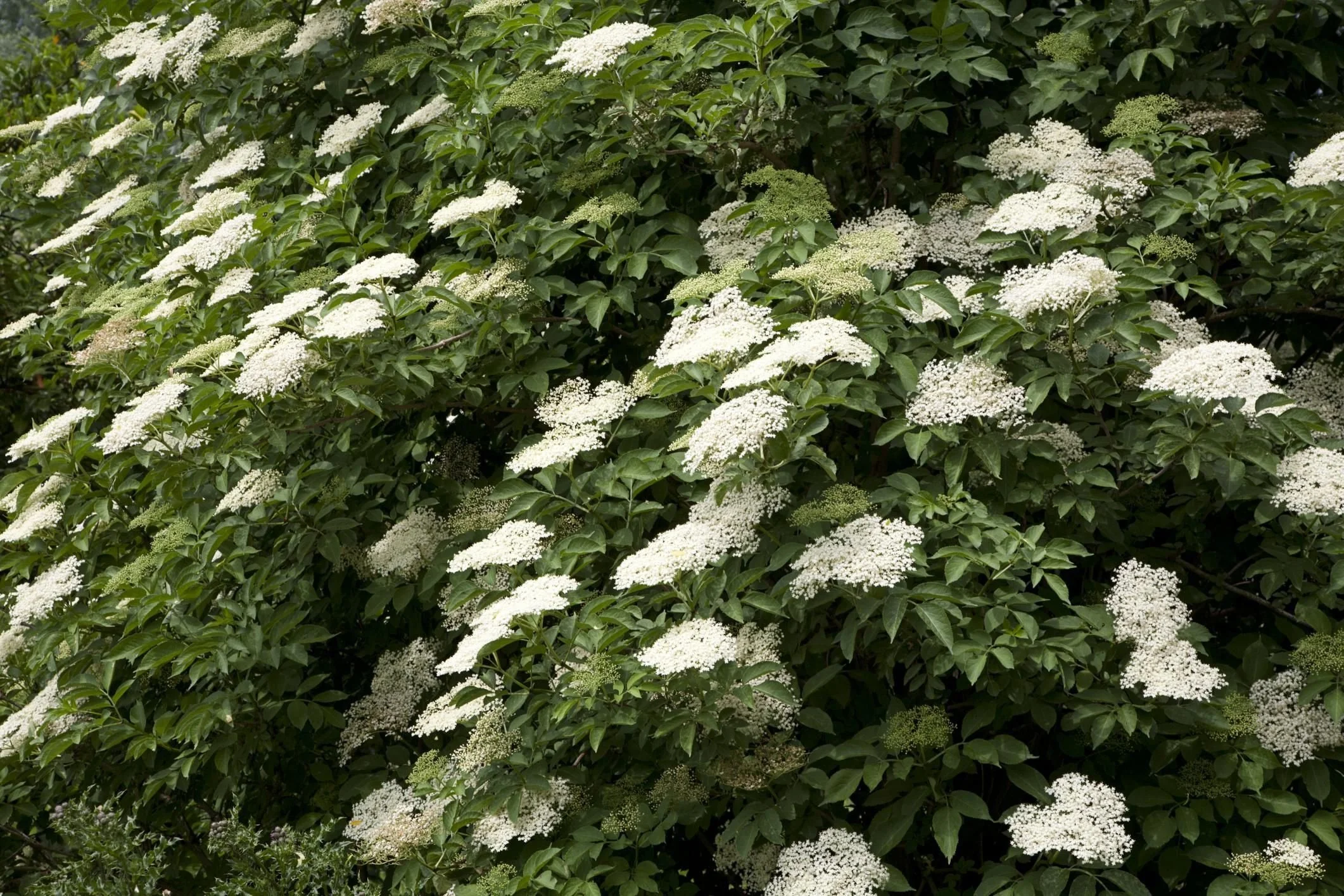
Regenerative Agriculture demonstrates that redemption isn't mystical abstraction - it's a measurable ecological recovery which can be substantiated by physical proofs. Degraded land becomes fertile again. Declining pollinator populations rebound and provide drastic gains in crop prosperity. Water retention improves in new topsoils, while stormwater runoff and sedimentation in regional waterways reduces drastically. These changes all happen slowly, require sustained sacrifice, and demand humility, yet they are changes that are definite, and full of staying power.
When a farmer walks across fields he or she has restored after years of neglect, the transformation is visible and undeniable. That experiential certainty - that broken things can be made whole through patient, sacrificial work - is the transformative power of Regenerative Agriculture. It is redemption made tangible.
For observers of such work, the lesson extends beyond farming: if land can be redeemed, perhaps other forms of brokenness hold similar possibility. This is why Regenerative Agriculture resonates beyond agricultural circles—it offers living proof that restoration is real, accessible, and worth pursuing even when timelines exceed individual lifespans.
- Thank you for considering